2021年5月18日星期二

Smart Environmental Vertical Waste Transfer Station System

 In order to solve the shortcomings in the prior art, the present invention provides an intelligent and environmentally friendly vertical waste transfer station system with low construction cost, flexible and convenient use, and high working efficiency.

The technical solutions adopted by the present invention to solve its technical problems are:

An intelligent environmental protection garbage compression vertical transfer station, characterized by comprising a ground foundation, a prefabricated pit located in the ground foundation, and a vertical transfer station system with a lower part installed in the prefabricated pit. The vertical transfer station system includes a structure Frame, garbage transfer box, flip tray, discharge funnel, walking device, compactor, controller and hydraulic system;

The lower part of the structural frame includes a plurality of transfer operation rooms located in the prefabricated pit and used to place garbage transfer boxes. The upper part of the structural frame includes a walking device located outside the prefabricated pit and movable to different transfer operation rooms through guide rails. The compactor is installed at the bottom;

The discharge funnel is provided at the top opening of the transfer operation chamber, the front side of the discharge funnel is hinged with the structural frame, and the bottom of the discharge funnel is connected to the structural frame through a discharge oil cylinder;

The garbage transfer box includes a box body and a door leaf. A multi-link hook mechanism corresponding to the door leaf and a limit plate corresponding to the multi-link hook mechanism is provided on both sides of the box body. The multi-link hook mechanism has two Hook plate connected to the door leaf, and the joint between the garbage transfer box and the door leaf is provided with door sealing strips;

The top end of the turning tray is hinged to the structural frame through a rotating shaft, the endplate at the middle of the front side of the turning tray is connected to the turning cylinder, the cylinder of the turning cylinder is rotatably mounted on the turning column, and the turning column is prefabricated in the prefabricated pit or on the structural frame, The front side of the flip tray is provided with a front drag box hook mechanism, a rear drag box hook mechanism, and a safety latch mechanism for fixing the garbage transfer box, and the front side of the flip tray is provided with a stopper for connecting with the ground foundation.

Vertical Waste Transfer Station System

Vertical Waste Transfer Station System

The front drag box hook mechanism is provided with two groups and distributed along the length of the flip tray. The two sides of the bottom of the flip tray are included. The front drag box hook mechanism includes a front drag box hook, a front drag box hook fixing seat, a front drag box hook pin, and a front The tow box oil cylinder and the front tow box hook oil cylinder fixing seat, the front tow box hook fixing seat is located under the front tow box hook mechanism and is connected and fixed with the flip tray, the front tow box hook is hinged to the front through the front tow box hook pin shaft The inside of the towing box hook fixing seat, the upper end of the front towing box hook is connected to the front towing box hook cylinder fixing seat through the front towing box hook cylinder, the front towing box hook oil cylinder fixing seat is connected and fixed to the flip tray, the front towing box hook is used to The garbage transfer box is connected.

The rear drag box hook mechanism is provided with two groups and distributed on both sides of the upper part of the flip tray along the width direction of the flip tray. The rear drag box mechanism includes a rear drag box hook, a rear drag box hook fixing seat, a rear support box hook pin, and a rear The towing box hook cylinder and the rear towing box hook oil cylinder fixing seat, the rear towing box hook fixing seat is located outside the rear towing box hook mechanism and is connected and fixed with the flip tray, the rear towing box hook is hinged to the rear towing through the rear supporting box hook pin shaft The inner side of the box hook fixing seat, the inner end of the rear tow box hook is connected to the rear tow box hook oil cylinder fixing seat through the rear towing box hook oil cylinder, the rear towing box hook oil cylinder fixing seat is connected and fixed to the flip tray, the rear towing box hook is used to The garbage transfer box is connected.

The safety latch mechanism is provided between the front drag box hook mechanism and the rear drag box hook mechanism. The safety latch mechanism includes a base plate connected to the flip tray and two sets of latch cylinder mechanisms mounted on the base plate, and two sets of latch cylinder mechanisms The bolt cylinder mechanism includes a bolt cylinder, a bolt cylinder mounting seat, a cylinder mounting seat, and a bolt sleeve. The lower part of the cylinder of the bolt cylinder passes through the cylinder mounting seat and the base plate. The rear end of the cylinder barrel is connected to the base plate through a plug oil cylinder mounting seat. The piston rod of the plug oil cylinder faces the outside of the base plate and is disposed of through the plug sleeve. The plug sleeve is fixed on the base plate.

A sleeve is provided on the outside of the compactor, and at least three longitudinal rails matching the compactor are provided on the inner wall of the sleeve.

The ground cushion of the ground foundation and the sidewalls and bottom walls of the prefabricated pit are all provided with a reinforced concrete layer, the surface of the reinforced concrete layer is provided with an SBS waterproof layer, and a water collecting pit is also provided below the prefabricated pit.

The ground cushion layer of the ground foundation and the reinforced concrete layer of the prefabricated pit sidewall are at least 35mm, the reinforced concrete layer of the prefabricated pit bottom wall is at least 50cm, the concrete strength level of the ground cushion layer is C15, the prefabricated pit sidewall and bottom wall The concrete strength grade is C30 and waterproof concrete is used.

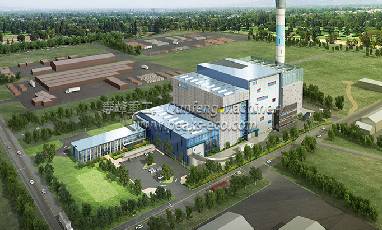
The Hydraulic Automatic Straw Baler Supplier believes that the beneficial effect of the present invention is that the structure is designed reasonably, the vertical state and horizontal state of the garbage transfer box can be changed by turning the tray, and the garbage is poured on one side Into the garbage transfer box, the other side realizes the loading and transportation of the garbage transfer box through a general garbage transport vehicle, which has the advantages of low construction cost, flexible and convenient use, and high work efficiency.

2021年5月11日星期二

Brief Introduction of Compound Biomass Fuel Gasification Project

 The garbage sorting system supplier shares this article for you.

The domestic waste composite biomass fuel gasification project is specifically divided into waste pretreatment and domestic waste composite biomass fuel production system. In the pretreatment of garbage, preliminary sorting is required, and the garbage is divided into inorganic garbage and domestic garbage. The inorganic garbage is directly sent to the brick-making workshop or landfill by the Lin board conveyor; the domestic garbage is sent to the storage yard by forklift Send domestic garbage to Lin board conveyor. The production system includes domestic garbage composite biomass fuel treatment system, ash residue treatment system, electrical system, lighting system, lightning protection system, automatic control system, water supply, and drainage system, etc. Among them, the processing system is composed of five systems: crushing system, batching system, drying system, control system, and conveying system.

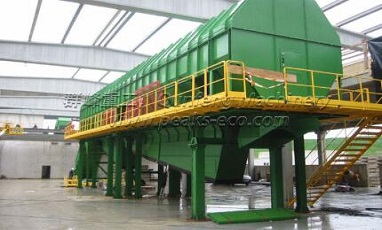
According to reports, the process flow of composite biomass fuel is: after the domestic garbage is sent to the garbage dump, the board conveyor will directly transfer the garbage to the crusher for crushing; the crushed garbage material will be transported to the drum screen for sieve Separate the soil, crushed glass, crushed stone, broken bricks, etc.; the sieved garbage materials are crushed in multiple stages; the garbage materials after the multi-stage crusher are sent to the fine crushing and forming machine Extruded and formed into a composite fuel. The shape and size of the composite fuel can be obtained by changing the specifications of the molding die; the molded composite fuel is then sent to a direct heating energy-saving drying oven for drying at a temperature of 100℃- Between 150 ℃, the composite fuel enters and exits continuously without stopping, and the production capacity reaches 20 tons/hour. The moisture content of the dried composite fuel is within 18%, and it is directly sent to the storage yard or directly loaded by the conveyor belt for delivery. Or use infrared drying.

Garbage Sorting System Supplier

Garbage Sorting System Supplier

The treatment technology of the project can realize that the daily mixed domestic waste is directly made into a composite fuel with a calorific value of 3000-3500 kcal by the domestic waste treatment system. There is no smoke, sewage, and dioxin emission during the whole treatment process. Drying waste materials and finished fuels are carried out at low temperature (not exceeding 150 degrees), and only produce water vapor. Water vapor is sent to the deodorizing tower through the pumping device and discharged after being deodorized by the water curtain. The sewage used for deodorizing treatment is discharged into the sewage treatment tank through the pipeline for treatment and recycling.

2021年5月3日星期一

The Development Prospect of Garbage Sorting Equipment Is Very Optimistic

Recycling sorting equipment factory share this article for you.

As the urban population continues to increase, people's living standards also continue to improve, and the resulting domestic waste is also increasing. In the process of urbanization, garbage as a product of urban metabolism has become a burden for urban development, and basically garbage is still stacked in the open air, and the harm to the environment has become increasingly serious. Therefore, environmentally friendly and economical disposal of urban domestic waste has become a very urgent task. Existing garbage disposal methods include discarding to land, discarding to rivers and oceans, landfilling, composting, incineration, and recycling.

At present, most waste disposal is mainly based on landfills, accounting for more than 70% of the total treatment volume. Most countries in the world, especially the majority of waste treatment in underdeveloped countries use this method. This method is characterized by low construction and operating costs, simple operation, and large processing capacity. But there are also many disadvantages: First, it takes up a lot of lands, it is difficult to select a site, and the cost of land acquisition is high; Second, a lot of waste is contained in the waste, and the waste is artificially turned into "a resource that cannot be grown, a huge amount thrown away. "Wealth" cannot meet the requirements of resource treatment; third, the environment is seriously polluted. Because the existing landfill construction is too large to meet the requirements of a sanitary landfill, the bacterial toxins in the garbage continue to leach downward, polluting the land and water quality, and with the increase of accumulation and the continuation of time, the pollution spreads to the surrounding and underground deep layers. After thousands of years of damage, the poisonous and smelly gas emitted by the garbage diffuses around, forming three-dimensional pollution in the air, surrounding and underground. Although a few "sanitary landfills" have been built in many developed countries and some more developed cities in my country to reduce some pollution, the environmental pollution problems caused by technical imperfections are still many and cannot be solved fundamentally.

unicipal Waste Sorting MachinMe

Therefore, the advantages of the municipal waste sorting machine are highlighted. The garbage sorting equipment is used to recycle domestic garbage into resources, and the urban domestic garbage is accurately classified, and then the appropriate ones are used according to the different properties of the classified garbage. The method should be treated so that it can be recycled and reused, so as to truly achieve the harmlessness, reduction and harm reduction of garbage, and at the same time, it can also reduce the demand for natural resources and realize the sustainable use of resources. Therefore, the development prospects of garbage sorting equipment are very considerable.


2021年4月26日星期一

Waste Screening Efficiency and Its Influencing Factors

 The garbage sorting equipment factory shares this article for you.

(1) Screening efficiency

In theory, the fine particles with a particle size smaller than the mesh size can pass through the mesh to become the under-screen product, while the coarse particles larger than the mesh size should be left on the screen to become the product on the screen. However, in the actual operation of the waste treatment equipment company, due to the influence of many factors during the screening process, there will always be some fine particles smaller than the screen hole left on the screen to become the product on the screen, and the fine products in the screen product that have not passed through the screen hole The more particles, the worse the screening effect. The screening efficiency is an index to evaluate the separation efficiency of the screening equipment.

(2) Influencing factors of screening efficiency

① Screening material properties The screening efficiency of materials is closely related to the size distribution, particle shape, water content and mud content of the screening materials.

The particle size distribution of construction waste particles has a great influence on the screening efficiency. The more "easy sieve particles" in the waste, the higher the screening efficiency; and the more "difficult sieve particles" with a particle size close to the sieve pore size, the lower the screening efficiency.

The shape of construction waste spikes also has an effect on the screening efficiency. Relatively speaking, the screening efficiency of spherical, cubic, and polygonal particles is higher; when square or round screens are used, flat or rectangular cubes are screened. When the material is used, the screening efficiency is low. Linear materials, such as waste wires and tubular materials, must be sieved slowly through the "needle lead" with one end facing down. The longer the material, the harder it is to sieve. In the disc sieve, the screening efficiency of this thread will be higher. For flat materials such as plastic film, paper, cardboard, etc., it will be small on the screen surface, forming a "blind zone" and clogging Large screening area, which greatly reduces the screening efficiency of materials.

The moisture content and mud content of construction waste also have a certain effect on the screening efficiency. When the screen hole is small, the external moisture of the waste will make the fine particles clump or attach to the coarse particles and not easy to penetrate the screen; when the screen hole is large, When the moisture content of the waste is high, the activity of the particles is increased. At this time, the water has the effect of promoting the fine particle sieving. The effect of moisture is also related to the mud content. When the mud content in the waste is high, a little water can also cause Fine-grained clumps.

② Performance of screening equipment The screening efficiency of screening equipment is closely related to the effective area of the screen surface. Common screen surfaces include bar screen surface, steel plate punching screen surface, and steel wire braided screen. The effective area of the bar screen surface is small, the screening efficiency is low, the effective area of the woven screen is large, the screening efficiency is high, and the punching screen surface is between the two.

The width of the screen surface is also an important factor that affects the processing capacity of the screening equipment. The length of the screen surface affects screening efficiency. The too-narrow screen surface thickens the waste layer and is not conducive to the fine particles close to the screen surface; the too widescreen surface Make the waste screening time too short, the general width to length ratio is 1: (2.5-3)

The size of the inclination of the sieve surface determines the discharge speed of the product on the screen. Too small an inclination is not conducive to the discharge of the product on the screen; if the inclination is too large, the waste discharge speed is too fast, the screening time is short, and the screening efficiency is low. Generally more suitable The sifting angle is 150~250.


③ Screening operation conditions In the screening operation, attention should be paid to continuous and uniform feeding, so that the waste is spread into a thin layer along the entire width of the screen surface, which not only makes full use of the screen surface but also facilitates the penetration of fine particles, which can improve the processing capacity of the screen and the screen Sorting efficiency. The timely cleaning and maintenance of the screen surface is also an important condition to ensure the screening efficiency.

When the vibration of the screening equipment is insufficient, the materials are not easy to be layered, which makes it difficult to penetrate the screen; when the vibration is too strong, the material is too late to penetrate the screen, and then it is re-vibrated by the person so that the waste quickly moves to the end of the screen surface and is discharged It also makes the screening efficiency not high. Therefore, the vibration frequency and amplitude should be adjusted for the vibrating screen. For the drum screen, it is important to adjust the rotation speed to maintain the vibration level at the most appropriate level.

2021年4月18日星期日

Garbage classification

 Garbage classification (English name: Garbage classification) generally refers to a series of activities that classify and store garbage, classify and classify garbage into a series of public resources according to certain regulations or standards. The purpose of classification is to increase the resource value and economic value of garbage, and strive to make the best use of it.

Garbage belongs to the public's private goods during the classification and storage stage. After the garbage is classified and released by the public, it becomes a regional quasi-public resource of the community or community where the public is located.

Judging from the methods of domestic garbage classification in cities at home and abroad, they are generally classified according to the composition and amount of garbage, combined with the resource utilization and treatment methods of local garbage.

Carrying out garbage classification and collection can reduce the amount of garbage disposal and treatment equipment, reduce the treatment cost, and reduce the consumption of land resources. It has several social, economic, and ecological benefits.

cause

Everyone throws a lot of garbage every day. In some areas with better garbage management, most of the garbage will be harmlessly treated by sanitary landfill, incineration, compost, etc., and the garbage in more places is often simply piled up or landfilled. , Leading to the spread of odor and polluting the soil and groundwater.

The cost of harmless treatment of garbage is very high. Depending on the treatment method, the cost of processing a ton of garbage ranges from about one hundred yuan to several hundred yuan. People consume a lot of resources, mass produce, consume a lot, and produce garbage in large quantities. The consequences will be unbearable.

Judging from the methods of domestic waste classification in cities abroad, they are generally classified according to the composition and amount of waste composition, combined with the resource utilization and disposal methods of local waste. For example, Germany is generally divided into paper, glass, metal and plastic; Australia is generally divided into compostable garbage, recyclable garbage, and non-recyclable garbage; Japan is generally divided into plastic bottles, recyclable plastic, other plastics, resource garbage, and large-scale garbage , Combustible garbage, non-combustible garbage and hazardous garbage, etc.

Classification meaning

Current situation

Garbage classification is a reform of the traditional way of garbage collection and disposal, and a scientific management method for the effective disposal of garbage. Faced with the increasing situation of increasing garbage production and the deterioration of environmental conditions, how to maximize the utilization of garbage resources, reduce the amount of garbage disposal, and improve the living environment through garbage classification management is an urgent issue of common concern to all countries in the world.

The reason for the increase in garbage is the improvement of people's living standards and increased consumption. According to statistics, in 1979, the amount of urban garbage collected nationwide was more than 25 million tons. In 1996, the amount of urban garbage collected was 1.16 yuan/ton, which was four times that of 1979. Although the garbage after high temperature incineration will not occupy a large amount of land, but its investment is amazing. Do we have no way to deal with garbage? There are ways, this is garbage classification. Garbage classification is to put garbage into the source at the source, and to make it a resource again through the removal and recycling of the classification.

The advantages of garbage classification are as follows:

Reduce land erosion

Some substances in domestic garbage are not easily degraded, which seriously erodes the land. Garbage classification, remove recyclable and non-degradable substances, reduce the amount of garbage by more than 60%.

Reduce pollution

Most of the waste disposal in China adopts sanitary landfill or even simple landfill, which occupies tens of thousands of acres of land; and the flies fly, the sewage overflows, and the smelly air smokes, seriously polluting the environment.

we provide garbage sorting system,you can know it.

garbage sorting system

2021年4月9日星期五

How Can Garbage Sorting Equipment Recycle Garbage?

 1. Resource-saving (volume reduction and volume reduction) is a good way to prevent problems from the source.

Resource-saving (volume reduction, volume reduction) is to reduce or suppress the production of plastic waste, including less use, that is, use as much as possible, or useless; or by filling natural organic materials or inorganic materials, to reduce the amount of plastic, Or reduce the consumption of disposable plastic packaging by improving product quality, increasing functionality, extending life, and multi-use. Thinning, that is, on the premise of ensuring application performance, by changing the raw material formula and product structure design, make the product lighter and thinner. Volume reduction, that is, reducing the volume of plastic waste through compaction, dissolution, defoaming, etc., and developing appropriate packaging to suppress excess packaging, etc.

2. Recycling (recycling) is an important measure of environmental harmlessness.

The garbage sorting system supplier believes that recycling (recycling) is not only a technical issue but more importantly, it includes a whole set of system engineering issues from legislation, recycling, production, inspection, and sales. It is an effective method for all countries to actively develop to ensure the sustainable development of the national economy and the coordination of economy, resources, and environment. In general, a considerable part of plastic waste is easy to recycle. However, for disposable plastic waste, it must be based on the type, quality, quantity, flow direction, and treatment method of the waste in each place. It is easy to recycle and has recycling value. Economically cost-effective should be recycled as much as possible, including materials, heat, Fuel oil, chemicals, etc., which are not only conducive to protecting the environment but also have significant decisions from the perspective of saving the earth’s limited resources and effectively using renewable resources. However, the current recycling will face many technical and economic difficulties regardless of the establishment of waste classification, collection and recycling systems, the development of efficient recycling technology and equipment, and the product direction of recycled materials. Increase investment in science and technology, and work together as a key issue to study and solve.

Municipal Waste Sorting Machine

Municipal Waste Sorting Machine

3. Harmless (degradable)

In real life, there are many disposable plastic wastes that are difficult to collect, such as compost bags, garbage bags, supermarkets, light plastic packaging bags used in the morning market, etc. or even mandatory collection, economic benefits are poor or even non-effective, such as Chinese food Tableware, plastic film, etc., these fields are more suitable for the use of degradable plastics. The use of municipal waste sorting machine has the following characteristics:

①Practicability: its application performance and hygienic performance are similar or equivalent to ordinary plastics;

 ②Degradability: After completing the use function, it can degrade faster under natural environmental conditions and become harmless fragments or debris easily absorbed by the environment;

③Safety: Substances generated during degradation and remaining after degradation are not harmful to the environment or potentially harmful;

④Economy: The price is the same as or slightly higher than similar ordinary plastic products. Therefore, for those disposable plastic products that are large, scattered, messy, difficult to collect, or economically unreasonable even if forced to collect, it is more appropriate to use degradable plastics, which can be degraded and broken into harmless fragments in a short period of time to achieve plastic waste reduction. Tolerance reduction, the purpose of reducing or suppressing environmental pollution. With the passage of time, it can eventually degrade completely and return to nature.


2021年4月1日星期四

The Main Method of Garbage Sorting

 China waste segregation machine supplier shares this article for you.

As the front-end technology of garbage disposal, garbage sorting technology is an indispensable procedure for the reuse of resources and the subsequent processing chain of garbage disposal. And especially in the chain of garbage incineration, sorting technology is particularly important. Garbage sorting can not only improve the utilization rate of resources to achieve the reuse of resources, but also improve the efficiency of garbage incineration.

The waste sorting technology can choose different ways of different wastes. Polaris Energy Conservation and Environmental Protection Network have sorted out the main technologies of waste sorting. The waste sorting technology can be divided into the following types:

Air & Ballistic separator

Air & Ballistic separator

Wind sorting

The basic principle of wind separation is that the airflow takes the lighter materials upward or the horizontal direction to a farther place, while the heavy materials are settled because the ascending airflow cannot support them, or thrown closer in the horizontal direction due to inertia distance. The wind separation process is based on the sedimentation law of various solid particles in the air. Air separation is mainly to recycle recyclable components such as paper and plastic.

magnetic separation

Magnetic separation technology is mainly used for the classification of mineral resources. The working principle of magnetic separation is that after other materials are selected into the separation space of the magnetic separator, they are subjected to magnetic force and other mechanical forces (such as gravity, centrifugal force, friction force, medium) Resistance, etc.).

Bounce sorting

Bounce sorting machine is conveying equipment with separation function designed for sorting inorganic particles in the garbage after coarse crushing. The machine utilizes the characteristics of the crushed garbage materials, and the design of the conveyor belt bounce function conveys the materials on one side while separating the inorganic particles or other hard particles. The separated particles move in the opposite direction to the transport materials to achieve the purpose of separation. Bounce sorting is mainly to select components such as batteries, ceramics, and masonry.

Density sorting

Sorting is mainly based on the density of objects, and garbage with different density values is classified.

Automatic sorting

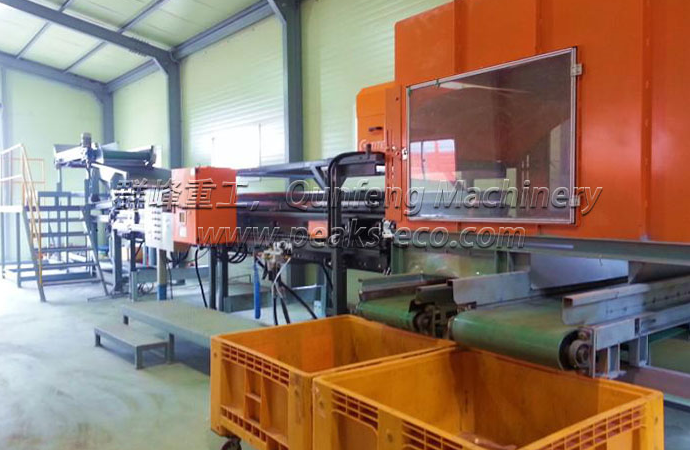
Domestic waste automatic sorting technology is a relatively mature domestic waste sorting technology. This technology combines mechanical, automatic control, microbiological and other methods, and uses an original mechanical-biological sorting method and device in a fluid environment, sewage comprehensive wetland treatment cycle The use of technology, TR microbial detoxification, and other technologies, the entire system has a high degree of automation, and there is little direct human participation. The entire system has a total of 22 classification exports, which can classify (or separate) mixed domestic waste into oversized pieces of waste, ferrous metals, and non-ferrous metals. 11 substances including metals, plastics and foams, flexible blocks, perishable organics, non-perishable organics, masonry glass, sand, waste batteries, landfills, etc., the waste recycling rate reach more than 85%, and the disposal project The sewage, dust, bacteria, and viruses in the plant have been treated and controlled.

In order to further improve the level of municipal solid waste sorting technology, it is also necessary to optimize and innovate the automatic sorting technology of municipal solid waste recycling, improve its sorting efficiency and sorting accuracy, and reduce system construction costs and operating energy consumption, material consumption and Management input. If the optimized and innovative municipal solid waste resource separation technology is adopted, more than 90% of the components in the waste can be used for resources, greatly reducing the amount of waste landfill, and prolonging the service life of the municipal solid waste landfill. Garbage sorting system for the garbage disposal to achieve harmless, reduce the goal of providing greater possibilities.

How does NIR Optical Sorting System Work?

NIR Optical Sorting   is one of the most rapidly developing high technologies in the last 20 years. This technique is convenient, fast, effi...