The anaerobic process of decomposition (or fermentation) of organic matter occurs all over nature and has been happening for a long time. In fact, bacteria that break down organic matter intobiogasare the oldest multicellular organisms on Earth. Human use of biogas, of course, did not go far back, however, some anecdotal evidence traces the first use of biogas by the Assyrians in the 10th century and the Persians in the 16th century. More recently, the 20th century has brought a Renaissance of industrial and small-scale biogas systems.
In the 18th century, it became clear to Flemish chemist Jan Baptise van Helmont that the decomposing organic matter produced a flammable gas. Not long after, John Dalton and Humphrey Davy clarified that the flammable gas was methane. The first major anaerobic digestion plant dates back to 1859 in Bombay. Not long after, in 1898, anaerobic digestion turned sewage into biogas in Britain, which was then used to light street lamps. In the next century, anaerobic digestion will be used primarily as a method of treating municipal wastewater. In the 1970s, when the price of fossil fuels rose, industrial anaerobic digestion plants gained popularity and efficiency.
Both India and China began developing small biogas digesters for farmers around the 1960s. The goal is to reduce energy poverty in rural areas and provide cleaner cooking fuels in remote areas. Nearly one-third of the world's population still uses firewood and other biomass for energy, causing damaging health and environmental problems. (Link to blog posts on developing countries)
In India, the popular model is called a floating bucket biogas digester, while the preferred biogas model in China is called a fixed dome biogas digester.
Since then, family-scale biogas installations have gained increasing attention and popularity as a means of reducing household waste and providing clean, renewable energy to households around the world. Over the past 15 years, biogas programs have been adopted in various countries around the world to make home biogas systems and large anaerobic digestion plants efficient and convenient. The benefits of using biogas systems to convert waste to energy are becoming more important as landfills become illegally overloaded and methane releases create more concerns.
Many uses of biogas:
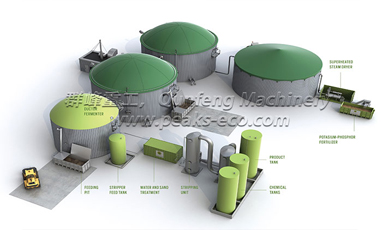
Biogas can be produced from various types of organic matter, so there are many models of biogas digesters. Some industrial systems are designed to treat: municipal wastewater, industrial wastewater, municipal solid waste, and agricultural waste.
Small systems are often used to digest animal waste. And the new family-scale system is designed to digest food waste. The resulting biogas can be used in a variety of ways, including natural gas, electricity, heat, and transportation fuels.
In Sweden, for example, hundreds of cars and buses run on refined biogas. Sweden's biogas mainly comes from sewage treatment plants and landfills.
Another example of diverse uses for biogas is the First Milk Plant. One of Britain's biggest cheese producers is building an anaerobic digestion plant that will process dairy residues and turn them into biogas for use in the gas grid. Novel anaerobic digestion devices like these are popping up every day!
We have biogas energy plant here. If you are interested in us, please feel free to contact us.
Solid waste treatment usually refers to the physical, chemical, biological, physical and biochemical methods to transform solid waste into a process suitable for transportation, storage, utilization or disposal, the goal of solid waste treatment is harmless, reduction, resource. Some people believe that solid waste is one of the most difficult to dispose of the "three wastes", because it contains a complex composition, its physical properties (volume, mobility, uniformity, degree of comminution, moisture, calorific value, etc.) are also very variable, to achieve the above "harmless, reduction, resource "goal will encounter considerable trouble, the general prevention of solid waste pollution methods first of all to control its generation, for example, gradually reform the urban fuel structure (including civil industry) to control the consumption of raw materials in factories, quotas to improve the service life of products, improve the recycling rate of waste products, etc.; second is to carry out comprehensive utilization, solid waste as a resource and energy treatment, really can not be The use of the end-state solid waste after compression and non-toxic treatment, and then landfill and sink the sea, the main methods used include compaction, crushing, sorting, curing, incineration, biological treatment, etc.
Main characteristics
From the analysis of the relationship between solid waste and the environment, resources and society, solid waste has polluting, resource and social characteristics.
(1) Pollution
The polluting nature of solid waste is manifested as the polluting nature of solid waste itself and the secondary polluting nature of the solid waste treatment. Solid waste may contain toxic, combustible, explosive, radioactive, corrosive, reactive, infectious and pathogenic harmful waste or pollutants, and even contain pollutant-enriched organisms, some substances are difficult to degrade or difficult to deal with, the quantity and quality of solid waste emissions are uncertain and hidden, and the solid waste treatment process generates secondary pollutants, these factors lead to solid waste in its generation These factors lead to the pollution of solid waste in the process of generation, emission and treatment, which is harmful to the perspective and ecological environment, and even to physical and mental health, which shows that solid waste is polluting.
(2) Resourcefulness
The resource nature of solid waste shows that solid waste is the product of resource development and utilization and solid waste itself has certain resource value. Solid waste only becomes solid waste under certain conditions, and when the conditions change, solid waste may regain its use value and become raw materials, fuel or consumer goods for production, thus having certain resource value and economic value.
It should be noted that the economic value of solid waste is not necessarily greater than the cost of solid waste disposal, and in general, solid waste is a kind of low-quality, low-economic value resource.
(3) Sociality
The social nature of solid waste shows that solid waste generation, emission and disposal have a wide range of social nature. First, every member of society produces and discharges solid waste; second, the production of solid waste means the consumption of social resources and has an impact on society; third, the discharge, treatment and disposal of solid waste and the polluting nature of solid waste affect the interests of others, that is, there is an externality (externality means that the activities of the subject of activity affect the interests of others. When the interests of others are harmed, it becomes a negative externality, and when the interests of others are increased, it is called a positive externality. Solid waste discharge and its polluting nature have a negative externality, solid waste treatment and disposal have a positive externality), resulting in social impact, which means that whether generated, discharged or disposed of, solid waste matters affect the interests of each member of society. Solid waste is a private good before discharge and becomes a public resource after discharge.
Classification
Solid waste is usually classified into municipal domestic solid waste, industrial solid waste and agricultural waste according to the source of solid waste.
Municipal domestic solid waste mainly refers to solid waste generated in or for the activities that provide services for daily urban life, i.e., municipal domestic waste, which mainly includes residential domestic waste, hospital waste, commercial waste, and construction waste (also known as sludge). Generally speaking, the daily incremental garbage amount of each person in the city is 1-2 kg, and its amount and composition are related to the material living standard of residents, their habits, the degree of recycling of waste materials and the situation of municipal buildings. For example, domestic garbage is mainly kitchen garbage. For some municipal domestic solid waste, the annual output is very impressive. In the mid-18th century, only 3% of the world's population lived in cities; by 1950, the proportion of urban population accounted for 29%; in 1985, the figure rose to 41%. It is projected that by 2025, 60% of the world's population will live in or around cities. With so many people living or about to live in cities, which are areas of high concentration and greatly artificialized environments, pollution from urban waste is extremely prominent. In general, the higher the level of urban living, the more waste is generated. In large cities of low-income countries, such as Kolkata, Karachi and Jakarta, 0.5-0.8 kg per person per day is generated; in large cities of industrialized countries, the waste generated per person per day is usually about 1 kg.
Industrial solid wastes are solid wastes such as mining waste rock, ore dressing tailings, fuel waste slag, chemical production and smelting waste slag generated in industrial and transportation production activities, also known as industrial waste slag or industrial waste, including industrial waste slag, waste chips, sludge, tailings and other wastes. Industrial solid waste according to its source and physical properties can be broadly divided into six categories. And according the toxicity of slag can be divided into two categories of toxic and non-toxic slag, where fluorine, mercury, arsenic, chromium, lead, cyanide and other compounds and phenols, radioactive substances are toxic slag.
Agricultural solid waste, also known as agricultural waste, refers to solid waste generated from agricultural production activities (including scientific research), including waste generated from five agricultural industries: plantation, forestry, animal husbandry, fishery and secondary industries.
A brief history of development
Solid waste disposal and utilization have a long history. As early as 3000~1000 BC, during the Minoan civilization in ancient Greece, the capital of Crete, Nessus, had the disposal of garbage mulch buried in a large pit. But most ancient cities were discarded arbitrarily, year after year, solid waste, and even make the city buried, and some cities were later rebuilt on the ruins. The present site of the British city of Bath is 4-7 meters higher than its original site in the ancient Roman period.
In order to protect the environment, some cities in ancient times enacted ordinances to manage garbage in ancient Rome, a sign on the platform says "garbage must be dumped far away, offenders are fined". 1384 Britain issued an ordinance prohibiting the dumping of garbage into the river. In 1874, the world's first incinerator was built in England, and after the incineration of garbage, the remaining ashes were landfilled. 1875, England promulgated the Public Health Act, which stipulates that local governments are responsible for centralized garbage disposal. The earliest disposal methods are mainly landfill or incineration.
China, India and other Asian countries have been using manure and using waste composting as disposal methods since ancient times.
After the 20th century, with the development of productivity, the population further concentrated in cities (80% of the population in the United States 100 years ago in rural areas, now 80% of the population in cities), consumption levels increased rapidly, and the amount of solid waste discharged increased sharply, becoming a serious environmental problem. Since the 1970s, the United States, the United Kingdom, the Federal Republic of Germany, France, Japan and other countries have put forward the concept of "resource recycling" due to the tight waste disposal sites and the huge disposal costs, as well as the lack of resources. In order to strengthen the management of solid waste, many countries have set up special management organs and scientific research institutions to study the sources, nature, characteristics and environmental hazards of solid waste, the disposal of solid waste, recycling, utilization of technology and management measures, as well as the development of various regulations and environmental standards, and the publication of relevant books and journals. The treatment and utilization of solid waste have gradually become an important part of environmental engineering.
Development trend
In order to protect the environment and develop production, many countries are constantly adopting new measures and technologies to treat and utilize solid wastes. Mining waste has evolved from being deposited in low-lying areas to mine land rehabilitation and safe damming. Industrial waste has evolved from passive stockpiling to comprehensive utilization. Municipal waste has developed from manual collection and transportation to mechanized, automated and piped collection and transportation; from uncontrolled landfills to sanitary landfills and filter leachate recycling landfills; from open-air incineration and use of incinerators to incineration for energy recovery, medium and high-temperature decomposition, etc., and from compression molding to high-pressure compression molding. Municipal organic waste and agricultural organic waste is also used to make biogas to recover energy. Industrial hazardous residues have evolved from segregated stockpiles to chemical fixation and chemical transformation to prevent pollution. The general trend is to move from passive disposal to active utilization and re-resourcing of waste.
Sorting and recycling municipal waste. According to the chemical and physical properties of waste, such as specific gravity, electromagnetism, color, resilience, combustibility, etc., sorting, and then dry, water slurry machine method, high or medium temperature decomposition and other methods to recover metals, glass, paper raw materials, plastics and other materials, as well as the recovery of heat and combustible gas.
For industrial waste residues, most of them are used as resources for comprehensive utilization. The United States since the 1970s has been discharged annually more than 40 million tons of steel slag and blast furnace slag use up. Britain, France, Sweden, Belgium, the Federal Republic of Germany, etc. blast furnace slag also in the year all get utilized. China, the Soviet Union blast furnace slag utilization rate of more than 70%, Japan is 85%. Japan, Denmark, and other countries have all the utilization of fly ash, the utilization rate of the United States is 20%, China is 10%.
Solid waste resource approach
1, waste recycling: including classification and collection, sorting and recycling.
2, waste conversion utilization: that is, through certain technologies, the use of certain components of waste to produce new forms of substances. Such as the use of waste microbial decomposition to produce compostable organic matter to produce fertilizer; cracking of carved plastic to produce gasoline or diesel, etc.
3, waste to energy: that is, through chemical or biological conversion, the release of energy contained in the waste, and to be recycled. Such as waste incineration and power generation or landfill gas power generation, etc.
Clean production
A practical production method and technology that uses natural resources rationally, improves the utilization of materials and energy, reduces and eliminates the generation and emission of waste, and protects the environment. Four levels of meaning.
① The goal of cleaner production is to save energy, reduce the consumption of raw materials, and reduce the number of pollutants generated and emitted.
②The basic means of cleaner production are to improve process technology, strengthen enterprise management, maximize the level of resource and energy utilization and change the product system, update the design concept, strive for the least emission of waste, and inclusion of environmental factors in the service.
③The method of cleaner production is emission audit, through which emission parts and causes are discovered, measures to eliminate or reduce pollutants are screened and product life cycle analysis is conducted.
④The ultimate goal of cleaner production is to protect human beings and the environment and to improve the economic efficiency of enterprises.
4,Cyclic Economy
Circular economy takes the maximization of resource utilization and minimization of pollution emission as the mainline, integrates clean production, comprehensive utilization of resources, ecological design, and sustainable consumption, and uses the law of ecology to organize economic activities into a feedback process of "resource-product-regenerated resource", so as to realize "low exploitation, high utilization, and low emission". It is an economic development model that "promotes the coordination and harmony between human and nature".
Sorting or arranging just how you get rid of your garbage is an essential part of the recycling process. It's insufficient to segregate it,recycling businessneeds to arrange every little thing out first prior to loading it right into reusing equipment to start the recycling process.
One factor for this is that recycling company make certain whatever they manage is garbage that can be reused. They do not want to waste time refining things that are not multiple-use as well as, actually, it can in some cases threaten for transport vehicles to lug unrecyclable materials as they can be delicate and also combustible.
Let's start with our homes
It is essential to begin partition from our homes. We do not require to purchase different bins for different types of things-- it can simply be accumulating paper as well as cardboard boxes, placing them in a separate trash bag before tossing them into the rubbish. It would certainly additionally be valuable as well as pertinent if we mark our bags to conveniently determine what they are. If it's plastic, we mark it 'plastic'; if it's paper, we note it 'paper', and so forth. By doing this, we're making our lives and also the lives of trash and also recycling companies easier. We may not earn anything from it but we're maximizing the performance of their recycling equipment since they don't require to arrange it any longer.
Food waste might ruin the recyclability of materials
An additional reason partition is important is that food waste and other garbage could wear away the capacity of some materials to be recyclable. If this happens, even if you have tons of recyclable material, it would be inadequate if it's not segregated properly.
We can earn from it also
In addition to aiding the setting, arranging or segregating waste can likewise be our stepping-stone to making revenue via recycling. We can arrange as well as segregate our waste and also use it to waste recycling firms for them not to have a difficult time arranging it. We could also do reusing by ourselves also. Nevertheless, we have to keep in mind that we can't simply reuse as well as reuse. We need to think about other factors as well due to the fact that you might not know that what you're doing is an inaccurate way of recycling. By segregating our waste, we're aiding the environment and also we're tracking what waste is being sent out from our houses. Recycling firms handle and also take care of waste, and afterward supply it to their clients for other usages or objectives. Their equipment prioritizes the sorting and also the recycling procedure, so by sorting it out, we sort of assisting them to and the setting at the same time. Recycling isn't really tough, we just need time to come to be knowledgeable about it and of course, various other factors that are along with it also. Begin by effectively arranging just how you discard rubbish or type whatever you discard.
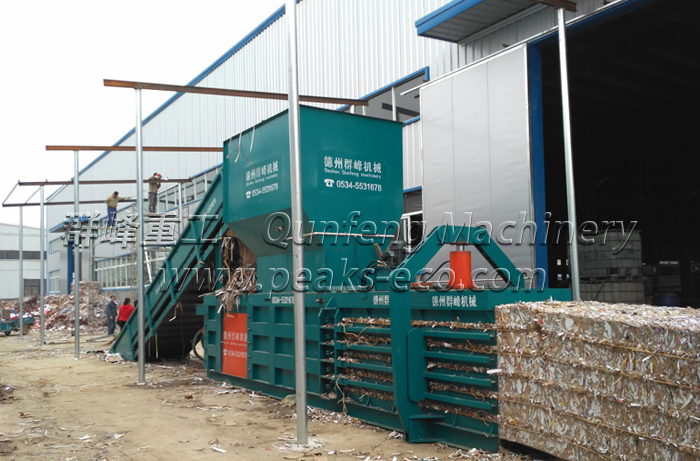
In order not to impact the use of the functional equipment of thePlastic Baler Machine. And in order to make better upkeep and maintenance of the baler, when we install the baler, in addition to concerns about some equipment parts of the baler installment, there are some things that are frequently ignored by the installer.
As a matter of fact, the option of location when mounting the baler is additionally really essential. There is also the modification technique prior to the baler is used is likewise extremely crucial. Before and also after getting a baler, among the tasks to be done is to develop the installation site. Assurance of the best production performance. It makes the waste feeding and also finished item packaging result easier and also fast. We supply Plastic Baler Machine and also Waste Transfer Equipment. If you have demand concerning our products, welcome to contact us!
In recycling, used materials are processed and reused into the resources we need. Instead of burning energy to make brand new products, recycling products is put back into the market for consumers to use. That way, we as consumers can meet our needs without consuming a lot of energy, a process on which the world has relied for too long. Transportation resources and recycling facilities can assist the recycling process and kick-start a range of environmental awareness activities that benefit people and the planet.
Conserving Natural Resources
Our planet has been overused and resources have been depleted over time, but this is something we as a society are finally beginning to understand and work to change. Transportation resources and recycling facilities can aid the recycling process, and eco-conscious activity can benefit us and our planet.
Reducing greenhouse gas emissions
The country's carbon footprint, which measures the man-made amount of greenhouse gases affecting our environment, is out of control. Part of the service involves delivering vehicles that would otherwise be discarded and recycling their individual parts for reuse. This helps curb greenhouse gas emissions because the new objects are built from materials that would otherwise clog landfills, while the objects are made from raw materials, releasing even more greenhouse gases into the atmosphere in the process!
Prevention of pollution
When raw materials are collected and manufactured to produce new products, harmful pollution enters our atmosphere. We collect waste and other waste resources to create a new recycling product chain. These will be repurposed for useful purposes.No need to collect any new ingredients and pass them through the industrial system on our watch!
Reduce waste
When we throw something in the trash, we haul it to a landfill and let it rot. Recycling helps reduce waste by moving waste materials to our recycling facilities, where we collect and reuse these items. Recycling also reduces waste, as no new resources are collected and may be wasted in the manufacturing process. In short, recycling gives new life to old materials and reduces the waste we cause. The waste cycle ends with recycling!
Reducing climate-altering carbon emissions
Because recycling means you need to use less energy to procure and process new raw materials, it produces lower carbon emissions. It also keeps waste that might emit methane out of landfills.
Reducing the amount of carbon dioxide and other greenhouse gases released into the atmosphere is essential to preventing catastrophic climate change.
Protect ecosystems and wildlife
Recycling reduces the need to grow, harvest, or extract new raw materials from the earth.
This, in turn, reduces harmful damage and destruction to the natural world: deforestation is reduced, rivers are rerouted, wildlife is injured or displaced, and water, soil, and air pollution are reduced.
Of course, if plastic waste is not safely recycled, it can be blown or washed up in rivers and oceans, ending up hundreds or thousands of miles away, contaminating coastlines and waterways, and becoming everyone's problem.
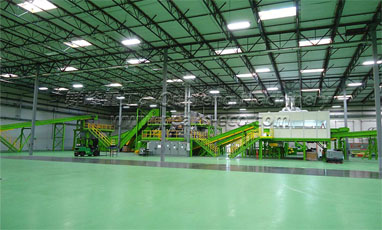
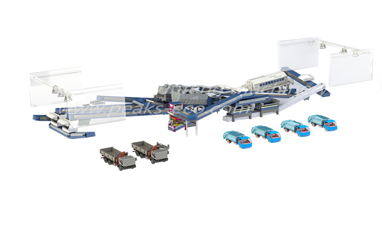
Municipal solid waste (MSW) or household waste consists of discarded daily consumer goods. This general waste is usually placed in a black bag or bin that contains a mixture of dry and wet recyclables, organic, inorganic, and biodegradable materials, including food waste, containers, cans, cartons, product packaging, newspapers, and cards. Waste recovery machines can be used to treat municipal solid waste.
Once recyclable materials are gathered from your doorstep or communal containers, they are further arranged in specialized centers that guarantee the top quality of the recycling process. This is where various sorting techniques enter into play. Commonly, sorting has actually been done either by hand with workers sorting what can be reused and choosing the materials to be thrown out, or mechanically. Today, nevertheless, innovative sorting modern technologies are being established in order to quicken the process of arranging yet to additionally generate better outcomes. Interesting innovations using magnets or optical systems are being made use of to properly arrange materials so even more of them can be recycled. Given the raised need to reducing our waste across Europe, it is estimated that the plastics sorting and also recycling field will see a 25 percent development which converts to the growth of regarding 300 plants for arranging and reusing by 2025.
Easy overview to understand exactly how to arrange your waste in your home
Discover just how to arrange your home waste appropriately, recycle everything that can be recycled, and conserve the atmosphere and non-renewable resources one piece of garbage at a time.
Glass bottles
Unfortunately, Americans get rid of around 74 percent of flawlessly recyclable glass bottles and jars every year. This results in an approximated 7 million lots of glass mosting likely to landfills each and every single year. By dividing your glass waste from the rest of your waste stream, you will be doing your bit for the environment as well as making sure that you don't contribute even more to landfills than you need to. Before reusing glass jars or bottles you should wash them and eliminate the lid (which can be placed in either the metal or plastic stream relying on what it is made of). I some places, you will be needed to separate different colored glasses to make the recycling procedure less complicated.
Metals as well as plastic
Steel and plastic product packaging, consisting of drink or food containers are frequently reused with each other. They ought to be tidy, without extreme impurities, oils, or oils, as well as should adapt to the reusing laws of your area. Some plastics can be reused effectively. Others can not and also must be included in the general waste stream. You need to check the recycling guidelines of your country or city.
Paper and also cardboard
Paper and paper derivatives are amongst the simplest materials to reuse. They must be sorted right into their very own bin. When arranging paper from the rest of your waste stream, ensure that you do not accidentally include plastic product packaging, sticker labels, or cartons that have excessive plastic or steel cellular lining.
Electronics
Nearly every digital product ever before generated might as well as ought to be reused. In numerous nations, you can drop off your used electronic devices at any shop selling comparable products. In other areas are dedicated deposit or collection centers where they will certainly reuse anything that is damaged or otherwise functioning and market or hand out points that still are.
Organic, biodegradable waste
Most organic waste can be composted, as well as should definitely be removed from your waste stream. If you have a lawn area or a large veranda, after that you can produce a garden compost bin to break down all your food waste right into top-notch fertilizer. Additionally, you can invest in a worm ranch-- which can sit in the storage room or the edge of a room-- that will certainly generate worm juice which you can sell.
Remember that checklist of excuses you had for not recycling in the house, institution, or work? That won't fly any longer. Adhering to suggestions are sensible even when you're really feeling careless or when in a hurry.Waste sorting supplierswill share this article with you.
First, attempt not to focus on waste, but waste. Trash serves no purpose. Waste, on the other hand, has value and only needs to be appropriately sorted. A check out annual city strong waste manufacturing worldwide generates a frightening number: 1.4 billion heaps. Most of this, about 800 million tons, ends up in garbage dumps. Yet before you begin squashing cans, discover the best means to reuse in your community or city. Call your municipality to see if there are vehicles accumulating recyclables or collection points in stores or public spaces. If there are selections, find out which ones fit your regular best. 1. Decline without remorses Constantly decline any kind of product you do not require, specifically packaging. Lowering the volume of trash is the best way to minimize the quantity of solid waste in the landfill. (Have a look at these pointers from customers that do not take any type of garbage house). Some stores currently have places for you to leave your product packaging at the time of purchase. 2. To clean, or otherwise to clean, that is the question Cleaning the leftover food from the discards will aid people who operate in the recycling plant. Your yogurt cup will certainly take days and even weeks to get to the reusing site. Have you thought of the scent? Yuck! To avoid wasting water as well as to make the task less complicated, leave the recyclables in the sink so they can be cleaned with the water you're using for the dishes. An additional method is to make use of already-used paper napkins to clean the products. 3. Compost nearly whatever wet or squishy This sort of waste accounts for half the quantity of all strong waste that fills landfills as well as generates methane gas, which is 20 times a lot more contaminating than co2. Yet a lot of it can be composted. Fruit and vegetable peels, coffee grounds, and also even damp paper can be turned into fertilizer. 4. Do you crumple up the paper when throwing it in the trash bin? Stop! Prevent folding or crumpling paper before throwing it away. The reason is understandable: The even more intact paper is, the more cash it is worth, as the (cellulose) fibers are more powerful, boosting the variety of times it can be reused. 5. Pointless paper On the other hand, there are several kinds of paper that can not be reused: greaseproof as well as plasticized paper, receipts from bank card equipment or grocery stores (prevent requesting them), paper with sticky glue (different the adhesive from the paper), dirty bathroom tissue, carbon paper, and tax obligation promo codes. (Made use of paper napkins and also paper towels do not belong in your recycled paper bin, either, however they can be composted. So can greasy pizza boxes; this way they will not unclean the rest of the recyclable paper.). 6. Pricey Glass. For the future, to stay clear of the price of reusing glass, we need to fight to raise using returnable containers. Till after that, reuse glass to the maximum. Whenever possible, prevent lengthy neck containers: They are not returnable, and also the reusing procedure (which shatters them into fragments) is still complicated as well as costly. 7. Keep tabs on those tabs. Do not get rid of the tabs from your soft drink or beer cans. They can get shed in the middle of the refuse and also wind up not being reused. 8. Squeeze that toothpaste. The tube is constructed from low-density polyethylene, which is a kind of plastic. Consequently, attempt to squeeze as much toothpaste from it as possible and also location it in the reusing container with the other plastic products. 9. Snack product packaging. You might not know this, however, these items typically have in their product packaging a sort of plastic that is covered by a thin layer of lightweight aluminum. It can be reused. The issue is that the procedure is costly, and also only a few firms are able to spend on it. Figure out exactly how it works in your location. And also, try to prevent buying items with this type of product packaging, ok? 10. Bye-bye, polystyrene tray. When you buy electronics packed with styrofoam, reuse them. This sort of styrofoam has a market price and therefore the procedure of recycling it is budget-friendly. That polystyrene tray with the plastic wrap used to keep fish, meat, and also even vegetables is another tale. Since it has little market value, it is pricey to recycle. So, take containers constructed from glass or lightweight aluminum to your butcher or fishmonger and also ask them to make use of these to pack your meat and fish. Vegetables and fruits do not require packaging! 11. Caution! Warning! Contaminated materials can not be tossed into the regular waste stream. Like the customers that acquire them, business creating harmful things must take obligation for their disposal. Thus, they have to give collection sites, where the products can be securely grabbed and reused. Some instances are: Bottles and packs of medication. The blister packs can not be reused normally and also need to not be placed in the bin with the remainder of your plastics. Like some medication bottles, they consist of residues of chemical compounds that can infect the setting. They're likewise, in some countries, made with an extremely harmful plastic that is just one of the least recyclable. So, you must take them to collection sites, which can be discovered in lots of pharmacies. Depending upon where you live, some districts gather all these things at "clinical collection websites," together with unused medications. Batteries, lights as well as ink cartridges.
There are collection sites at grocery stores and specialized shops for all of these items. When it comes to the ink cartridge, it's ideal to allow the ink to dry for a minimum of 24 hr-- this makes its container simpler to recycle. Harmful Mixture. Coffee pills are really difficult to recycle because, like the snack product packaging discussed above, they consist of a pair of different products: lightweight aluminum as well as plastics. The good news is the significant brands marketing these items supply collection sites at their stores. But consider doing it on your own and also the world support as well as getting a coffee machine that utilizes grounds. 12. Do you know what waste appears like? Are you certain? There are items that are not recyclable, as well as some of them will certainly amaze you. Besides all the non-recyclable paper pointed out above, movie wrap, paper clips, steel sponges, and also tape are additionally taken into consideration garbage. They go straight to the landfill, together with the non-compostable moist rubbish (unclean diapers, used cat trash, all that beautiful fragrant stuff).